
News
Offa Robbery: All Nigerian Politicians Sponsor Thugs – Olofa of Offa


T

he Olofa of Offa in the Offa Local Government Area of Kwara State, Oba Mufutau Gbadamosi, in this interview with SUCCESS NWOGU, speaks on the April 5 bank robberies in the ancient town and the police investigation into the raids
How do you feel about the killings during the bank robberies of April 5 in your kingdom?
Nobody feels good or is happy about it. We are all not happy about it. Life is very precious and sacred. Even if it was one person that was killed, nobody would be happy and we are not happy about it.
Government at the federal and state levels made promises to address some of the concerns raised. What is the latest on the promises?
Construction is ongoing on the new police station which they promised to build. The mobile police barrack they promised is also being constructed. There are about two mobile police units in the town; the UTC area manned, by 12 riot policemen, is also in the town.
Are you satisfied with the efforts of the police in relation to the investigation being carried out into the bank robberies so far? To some extent, the investigation was going on perfectly but later, it took another dimension that was not clear to all of us because it was politicised and we are praying to the almighty Allah that such should not affect the dispensation of justice or jeopardise justice. How do you mean that it was getting politicised?
Security agents made some arrests and investigation was going on but we later heard that names of the Senate President, Dr. Bukola Saraki, and others were being mentioned and linked to the incident and we do not believe (their involvement in the incident). We believe that is politics. We believe that it is political persecution and nothing more than that.
Why did you say it is political persecution?
Do you expect somebody like Bukola to ask someone to carry a gun and kill the people he is ruling or steal their wealth? He has been giving us; we do not expect that he would go and rob Offa or ask some people to go and rob us. What will he gain from that?
But some of the suspects arrested were allegedly seen at the wedding of Saraki’s daughter suggesting that they are close friends of his family.
You can see them at (social) venues. It is just like you sending someone with your car to go and get something from the market and he decides to use the car for another thing. Would that mean that you are the one that sent him to go and do that? If I give you my car to pick a friend from Ilorin, and on your way, you decide to branch to Omu-Aran to go and do another thing, does that mean I am the one that sent you to Omu-Aran? That is it! If it is a question of thugs, all the politicians have thugs. You would not know what they are doing. I listened to the confessions of the suspected robbers. They never said he (Saraki) sent them to go and rob. They said they were his political thugs and that he was not aware of their robbery (operations).
Some people argue that Saraki, by empowering them and giving them vehicles, emboldened them to commit crimes and they felt protected or shielded by the number three citizen of Nigeria.
He gave vehicles to a lot of people. He gave many people all over the country. Many people received vehicles from him. Even in Offa, any time politicians are doing their empowerment programme, they give out cars, motorcycles and other items to people. Did they give them such things to them so that they can commit crime? It is to empower them. If they are sensible enough, they use it for commercial purposes. Empowerment is not an encouragement to go and steal.
What is your view on the protest and counter protests that took place in Offa on the issue when you went for the lesser Hajj?
The protesters are politicians. Those who protested in favour of Saraki and those who protested against him are politicians who are not saying the truth.
What is your advice to parents because some Offa indigenes were allegedly involved in the incident?
Parents have great roles and responsibility to play towards the upbringing of their children. Parents must ensure that their children have sound moral training and must ensure that they avoid crimes. When you see your son or daughter, with some kinds of people that appear not to be noble, you are supposed to ask questions. You must demand to know the identities of his friends and what they do for a living. Unfortunately, some people do not care. However, we know that there are many children who usually deviate from the sound moral, social and African training their parents give them. Some parents have tried their best to provide everything necessary for their children to become useful citizens and even become self-reliant, but sometimes, some of them would deviate and engage in anti-social conducts, vices and crimes. Parents should not be held accountable for the conduct of children who deviate from the good paths introduced to them by their parents.
So, what is your advice to the youths?
The youths must refrain from the get-rich-quick syndrome. There is dignity in labour, patience and hard work to become wealthy. Youths must learn to embrace dignity of labour. Many of them do not want to work and make money. They want quick money through quick fixes. Such money may not last. The government has been encouraging them to go into farming or get themselves engaged in some productive and useful ventures but some of them do not listen to such advice and words of wisdom. The youths must refrain from crime which ultimately may cut short their lives or put them and their families in bad reputation and even in suffering. They must avoid crime. They should also know the friends they make and keep. They must not make friends with ungodly and evil-minded youths.
PUNCH

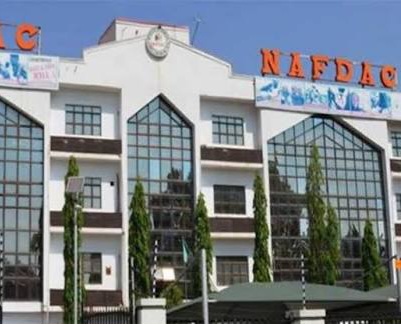
The Manufacturers Association of Nigeria has appealed to the Federal Government to restrain the National Agency for Food and Drug Administration and Control from proceeding with its ban on alcoholic beverages packaged in sachets and small PET bottles, warning of catastrophic economic consequences.
In a statement issued by Director-General Segun Ajayi-Kadir, MAN described NAFDAC’s renewed enforcement action as detrimental to indigenous industrial operators and fundamentally inconsistent with earlier government directives.
The manufacturers’ body emphasized that NAFDAC’s recent move directly contradicts the House of Representatives resolution dated March 14, 2024, which specifically restrained the agency from implementing the punitive ban following comprehensive stakeholder consultations through a public hearing.
“Rather than abiding by the generally agreed resolution, NAFDAC bided its time and chose to rely on a resolution of the Senate that was devoid of the usual stakeholders’ engagement,” Ajayi-Kadir stated, noting that operators now face confusion over conflicting directives from different arms of government.
MAN warned that enforcing the ban would devastate Nigeria’s manufacturing sector, threatening over ₦1.9 trillion in existing investments and triggering the retrenchment of more than 500,000 direct employees alongside approximately five million workers in the indirect value chain.
The association cautioned that the restriction would paradoxically undermine public health by creating market opportunities for illicit, substandard and unregulated products beyond the control of regulatory authorities.
“This is counterproductive as it will open up the market for illicit, sub-standard, and unregulated products. It will lead to an influx of imported alternatives, mostly smuggled. It will deny the government of revenues collectable from the companies,” Ajayi-Kadir declared.
The manufacturers’ group emphasized that alcohol served in sachets by local producers is manufactured under hygienic conditions and certified by regulatory agencies including NAFDAC itself, making the ban particularly contradictory.
MAN also challenged the untested assertion that sachet alcohol drives underage consumption, citing credible and empirical research that contradicts this claim. The industry has independently invested over ₦1 billion in nationwide media campaigns promoting responsible alcohol consumption and discouraging underage abuse.
The association stressed that banning certified products would deny adult consumers with limited budgets access to regulated alcoholic beverages while simultaneously depriving the government of substantial tax revenues.
Food, Beverages and Tobacco Senior Staff Association and National Union of Food, Beverages and Tobacco Employees have joined MAN in opposing the ban, demanding that NAFDAC provide empirical evidence that sachet alcoholic beverages are being consumed by children.
Labor unions have called for the suspension of NAFDAC Director-General Professor Mojisola Adeyeye, accusing her of siding with multinational companies to undermine local manufacturers.
However, NAFDAC has maintained its position, with Adeyeye insisting that enforcement is backed by law following the Senate’s unanimous resolution setting a December 2025 deadline that has now passed.
The NAFDAC chief argued that the proliferation of high-alcohol-content beverages in sachets has made such products easily accessible, affordable and concealable, contributing to widespread misuse and addiction among minors and commercial drivers.
“This public health menace has been linked to increased incidences of domestic violence, road accidents, school dropouts, and social vices across communities,” Adeyeye stated, describing the ban as protective rather than punitive.
In contrast, civil society organization Socio-Economic Rights and Accountability Project has approached the Federal High Court in Lagos seeking injunctive orders to prevent the Federal Government from interfering with NAFDAC’s statutory powers to enforce the ban.
SERAP argues that continued circulation of sachet alcohol violates the National Health Act 2014, the NAFDAC Act and international commitments under the World Health Organization’s Global Strategy to Reduce Harmful Use of Alcohol.
The legal and economic battle over sachet alcohol highlights deeper tensions between public health regulation, economic survival and stakeholder consultation in Nigeria’s policymaking process, with no clear resolution in sight as multiple court cases and regulatory actions unfold simultaneously.
News
Shettima: Tinubu’s Reforms Rebuilding Nigeria’s Global Credibility, Restoring International Confidence

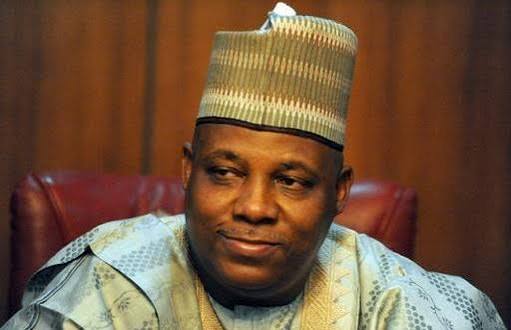
Vice President Kashim Shettima has declared that President Bola Tinubu’s economic reforms are successfully rebuilding Nigeria’s international reputation and restoring global investor confidence that had eroded over years of policy inconsistency.
Speaking at the formal opening of Nigeria House during the 2026 World Economic Forum in Davos, Switzerland, Shettima emphasized that the establishment of the country’s first sovereign pavilion at the prestigious gathering represents concrete evidence of Nigeria’s renewed seriousness about engaging the global economy.
“Nigeria House is a response to the lapses of the past. It reflects our intention, our seriousness, and above all, it advertises both our readiness and our resolve to take a front-line seat in the discourse of the global economy, not as observers, but as participants with a clear sense of purpose and place,” the Vice President stated.
Shettima explained that the tangible benefits of the Tinubu administration’s challenging but necessary reforms are beginning to materialize, pointing to macroeconomic indicators that demonstrate fundamental improvement in Nigeria’s economic trajectory.
According to the Vice President, Nigeria’s economy expanded by approximately 3.9 percent in 2025, marking the fastest growth rate recorded in over a decade, driven primarily by a resilient non-oil sector that now accounts for roughly 96 percent of gross domestic product.
“Services, agriculture, finance, and technology are expanding, while non-oil revenues now make up nearly three-quarters of government collections, marking a structural shift away from oil dependence,” Shettima noted, adding that this diversification strategy positions Nigeria for sustainable long-term prosperity.
The Vice President revealed that inflation, which stood above 30 percent in late 2024, eased significantly by the conclusion of 2025, while external buffers improved with foreign reserves rising above 45 billion dollars and greater stability emerging in the foreign exchange market.
He emphasized that Nigeria’s decision to open up to the world more deliberately comes at a critical turning point in the country’s economic journey, with reform dividends becoming increasingly visible across multiple sectors.
Minister of Industry, Trade and Investment Dr. Jumoke Oduwole reinforced Shettima’s assessment, stating that Nigeria under the current administration is rebuilding trust, restoring credibility and positioning itself as a global center for wealth creation and strategic partnership.
The minister applauded the Vice President’s support in realizing the historic vision for Nigeria House Davos, describing the project as a demonstration of strong public-private partnership that reflects the rejuvenation of Nigeria’s economy and showcases national pride.
At a separate engagement, Shettima told participants at a high-level panel discussion titled “When Food Becomes Security” that Nigeria, renowned as the African giant, has awakened from its slumber under Tinubu’s dynamic and purposeful leadership.
The Vice President expressed optimism that with ongoing Renewed Hope Agenda reforms, the coming months will witness greater climate adaptation moving from pilot projects to reality, as well as a boom in intra-African trade far beyond the current 10.7 percent baseline.
Speaking at the inaugural convocation ceremony of the Professionals’ Certification Programme at the Presidential Villa in Abuja, Shettima revealed that foreigners now choose to participate in professional training courses in Nigeria, citing this trend as evidence that global confidence in the country is being restored.
“The ongoing reforms of President Tinubu’s administration are beginning to restore the confidence of the global community in Nigeria,” the Vice President stated, emphasizing that transparent procurement practices and institutional strengthening form critical pillars of the reform agenda.
Nigeria House Davos, according to Shettima, represents a deliberate action to consolidate the gains of Tinubu’s economic transformation efforts through high-level engagements targeted at attracting investments in the country’s non-oil sector.
The Vice President stressed that while government can open doors, create frameworks and de-risk environments, only private enterprise can animate growth, scale opportunity and translate policy into productivity, calling on the private sector to drive Nigeria’s economic renaissance.
Upon returning to Abuja from his week-long diplomatic and economic mission that included stops in Guinea-Conakry and Switzerland, Shettima declared that Nigeria has reclaimed a frontline seat in global and regional policy conversations.
News
“I Can Decide To Revoke The Land Allocated To Onitsha Main Market And Build A School On It” — Gov Soludo
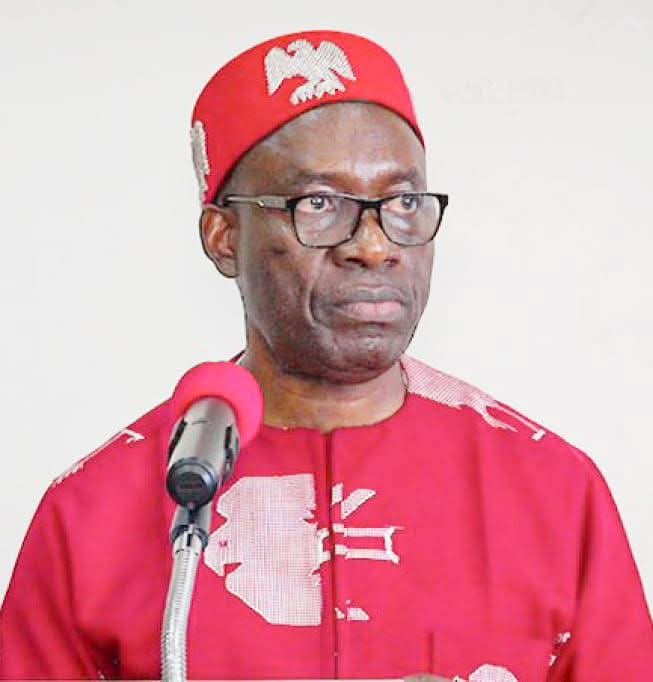
Anambra State Governor, Professor Chukwuma Charles Soludo, has sparked fresh controversy after stating that he has the constitutional power to revoke the land allocated to Onitsha Main Market and repurpose it for public use, including building a school. The governor made the remark while addressing market leaders amid the ongoing dispute over the continued Monday sit-at-home observed by traders in the state.
Soludo recently ordered the closure of Onitsha Main Market for one week after traders allegedly complied with sit-at-home directives despite the state government’s ban on such actions. He described the practice as “economic sabotage” and warned that the government would no longer tolerate disruptions to commercial activities in Anambra, one of Nigeria’s major economic hubs.
According to the governor, the Land Use Act empowers the state to revoke land allocations for overriding public interest, adding that affected owners would be compensated and could challenge the compensation in court if dissatisfied. He further warned that shops that remain closed could be sealed, fined, or taken over by the government and reassigned to willing traders.
The decision has generated mixed reactions, with critics accusing the government of punishing ordinary traders and worsening economic hardship, while supporters argue that enforcing a full business week is necessary to restore economic stability and investor confidence in the state. Some lawmakers and stakeholders have also urged the governor to adopt dialogue and caution, citing potential losses and unrest from prolonged market closures.
As tensions continue, the development highlights the broader struggle between government authority, security concerns, and economic survival in the South-East, with Onitsha Main Market—one of West Africa’s largest commercial centres—at the centre of the storm.
-
 News2 years ago
Hardship: We Plan To Establish A National Commodity Board To Crash Food Prices – VP Shettima
-
News8 years ago
Blog Reader; Samson Osagiede Celebrates Fiancè Benedicta Daniels’s Birthday With Sweet Words
-
Home9 years ago
News Channel claims Donald Trump is an orphan from Pakistan,share alleged childhood photo
-
Home9 years ago
Another $175m Found in Patience Jonathan’s wife’s firm’s Bank Account
-
Home9 years ago
Oil Spillage: House of Reps Member Shares Photos of the Water her Constituents Drink .
-
Home9 years ago
Zara Buhari & Ahmed Indimi’s Wedding Access Card
-
 Sport7 years ago
Modric, Marta Wins 2018 FIFA Best Player Of The Year Awards ⚽️
-
News8 years ago
The Best Video You’ve Seen Today?