Politics
I Have No Link With Offa Robbery Suspects, Saraki Writes Police IG Again


For the second time, President of the Senate, Dr Bukola Saraki, has written to the Inspector-General of Police, Ibrahim Idris, in response to his invitation to appear for an interrogation over the allegations made against him by armed robbery suspects who attacked banks in Offa, Kwara State.
The police had in June invited Saraki for questioning over the bank robberies in Offa on April 5, but the Senate President responded to the invitation in writing.
The IG, in a letter dated July 23 and addressed to the Senate President, again asked Saraki to report to the police on Tuesday at 8 am to provide further clarification on his relationship with the five leaders of the robbery gang.
Idris, in his latest letter, insisted that the gang leaders claimed they were political thugs to Saraki, adding that “the Senate President supplies arms and money to the thugs; that everyone in Kwara Central fears them because of their guns and ability to kill anybody without hesitation.”
The Senate President, however, did not honour the invitation. He had escaped the siege laid to his Maitama, Abuja residence by the operatives of the Department of State Services and men of the Nigeria Police.
Asked on Wednesday if Saraki would answer the summons by the police, his Special Adviser on Media and Publicity, Mr Yusuph Olaniyonu, said his boss had responded to the police in writing.
Olaniyonu also said Saraki had answered all the questions raised by the police in his letter to the IG.
He added that Saraki’s letter was written and dispatched to the police on Tuesday, stressing that its receipt was duly acknowledged.
Olaniyonu further stated that after answering all the questions raised by the police in his letter, he did not believe that there was any further need for Saraki to go to the police personally.
“He has written a letter to them and the letter has taken care of the purpose of the invitation. He sent the letter to them yesterday (Tuesday). The letter addressed the issues raised in the invitation letter,” Olaniyonu said.
The police spokesman, Moshood Jimoh, could not be reached for comment on Saraki’s letter as he did not respond to several phone calls. He had yet to reply a text message as of the time of filing this report.
Also, it was learnt that the Deputy Senate President, Ike Ekweremadu, had written the Economic and Financial Crimes Commission requesting another date to appear before the commission.
It was learnt that Ekweremadu sent the letter to the EFCC on Wednesday.
A senior EFCC official told our correspondent that the senator noted that he wasn’t given ample time to honour the invitation and would, therefore, need more time.
The EFCC official said, “We received a letter from Senator Ekweremadu requesting another date to appear before us. We will respond to him in due course.”
Officials of the anti-graft agency accompanied by scores of policemen had on Tuesday laid siege to the Deputy Senate President’s home on Jim Nwobodo’s home, Apo Legislative Quarters, Abuja.
The EFCC operatives had attempted to arrest Ekweremadu barely hours after inviting him.
In a letter signed by the Director of Operations of the EFCC, Mohammed Abba, with a reference number, ‘CR.3000/EFCC/DOPS/Vol.49/40 dated July 24, 2018, the commission asked the Deputy Senate President to immediately make himself available for questioning.
In the letter titled, ‘Case of Conspiracy, Abuse of Office and Money Laundering’, the anti-graft agency said the request was made pursuant to Section 38(1) of the Economic and Financial Crimes (Establishment) Act, 2004.
The letter read in part, “The commission is investigating the above-mentioned case in which your name featured prominently and the need to obtain certain clarifications from you became imperative.
“In view of the above, you are kindly requested to report and interview by the undersigned at 5 Fomela Street off Adetokunbo Ademola Crescent Wuse 2, Abuja on Tuesday, July 24, 2018, at 10 am prompt.”
EkweremaduEkweremadu could not be reached to confirm or deny his response to the EFCC. His Special Adviser on Media, Uche Anichukwu, was contacted via telephone on Wednesday afternoon but he asked for more time to reach out to his boss. When he was called again at 7:45 pm, he said his boss was not home.
Anichukwu had yet to reply, as of the time of filing this report, to the text message sent to him telling him about the information from the EFCC source.
In a related development, Ekweremadu has given more details on the siege to his Abuja residence by the operatives of the EFCC.
A statement by his Special Adviser on Media, Uche Anichukwu, on Wednesday, quoted Ekweremadu as explaining the situation on Tuesday when the leaders and members of the Senate and the Peoples Democratic Party visited him after the security agents had left.
The Deputy Senate President said the security agents left at about 12:20 pm after spending about six and a half hours.
Ekweremadu said, “We anticipated that a number of our colleagues in the All Progressives Congress would defect and join the Peoples Democratic Party. In anticipation of that, the APC leadership had tried to stop them. When that didn’t happen, the first thing they did was to invite President of the Senate (Bukola Saraki) to come to the police this (Tuesday) morning. They believe that once the President of the Senate goes to the police, I would be the one to preside and probably give effect to the letter of defection.
“In anticipation of that, the police, the EFCC and other security agencies came together — about 200 of them — to stop me from going to the National Assembly. They said I should come to the EFCC to give an explanation over the things I was accused of. I agreed to follow them even though there was no prior invitation, but they were not eager to let me go to answer the invitation.
“The plan was to stop me and the President of the Senate from going to the National Assembly. Unfortunately for them, the President of the Senate was already at the Senate to preside over the plenary session.”
Meanwhile, Governor Ayodele Fayose of Ekiti State on Tuesday night separately met with Saraki and Ekweremadu. While he visited the Deputy Senate President at his residence, the governor met with the Senate President at his office.
Speaking to journalists at the National Assembly, Fayose said the defections from the APC were for Nigerians and not the PDP. He said the defectors had taken a “path of honour.”
Two of the 14 senators who dumped the APC on Tuesday had denied joining the PDP. While Senator Monsurat Sunmonu (Oyo-Central) said she defected to the ADC, Senator Lanre Tejuoso (Ogun-Central) said he had yet to join another party.


Nigeria’s National Register of Voters has surpassed 103 million ahead of the 2027 general elections, the Independent National Electoral Commission (INEC) has announced.
INEC Chairman, Professor Joash Amupitan, disclosed the latest figure on Monday in Abuja while delivering a keynote address at a strategic workshop for media executives organised by the Nigerian Guild of Editors in collaboration with the commission.
According to Amupitan, the increase followed the completion of the three-phase Continuous Voter Registration (CVR) exercise and the final clean-up of the register using the Automated Biometric Identification System (ABIS).
The three phases of the CVR exercise produced a combined 10,772,421 new registrations.
The first phase, conducted between August 25 and December 10, 2025, recorded 2,611,266 registrations. The second phase, held from January 5 to April 17, 2026, produced 4,121,835 registrations, while the third phase, conducted from May 11 to July 26, recorded 3,867,997 registrations.
Amupitan said the newly registered voters were subjected to biometric verification, while the commission also completed the public display of the Preliminary Register to allow citizens to raise claims and objections.
Following the final ABIS clean-up, INEC said the national voter register had moved beyond the 103 million mark.
PVC Collection to Begin October 9
The INEC chairman also announced that nationwide collection of Permanent Voter Cards (PVCs) will commence on Friday, October 9, 2026.
Newly produced PVCs are expected to be distributed to Local Government Area collection centres for eligible voters to collect.
The commission has also introduced printable PVC technology, which it says is designed to reduce the waiting period for voters who need new or replacement cards.
INEC said the technology was introduced in accordance with Section 18(1) of the Electoral Act 2026.
The commission has completed eight of the 14 major statutory activities on its timetable for the 2027 elections, according to Amupitan.
The latest voter register figure marks a significant increase from the 93,469,008 registered voters recorded for the 2023 general elections.

Former Vice President Atiku Abubakar has criticised the All Progressives Congress (APC)-led Federal Government, accusing the administration of worsening poverty and economic hardship across Nigeria.
Atiku made the remarks in a statement published on Thursday, October 1, 2026, where he questioned the economic direction of the country under the APC government.
The African Democratic Congress (ADC) chieftain argued that the administration’s economic policies had placed additional pressure on households and businesses, making it increasingly difficult for many Nigerians to meet their basic needs.
He maintained that government claims of economic progress should be measured against the living conditions of ordinary citizens rather than financial and economic statistics alone.
Atiku Questions Government’s Economic Performance
The former vice president has repeatedly criticised the Federal Government’s handling of the economy, particularly the removal of fuel subsidies and foreign exchange reforms.
In previous remarks, Atiku argued that rising petrol prices had increased transportation, production and food costs, leaving households with reduced purchasing power. He also called on President Bola Tinubu to consider measures that would ease the cost-of-living burden. (Channels Television)
He has also challenged the administration’s reliance on macroeconomic indicators to demonstrate progress, insisting that economic reforms should translate into improved living standards for Nigerians. (The Guardian)
Atiku’s latest criticism comes as political parties and their candidates continue preparations for the 2027 general elections, with the economy expected to remain a major issue in political discussions.
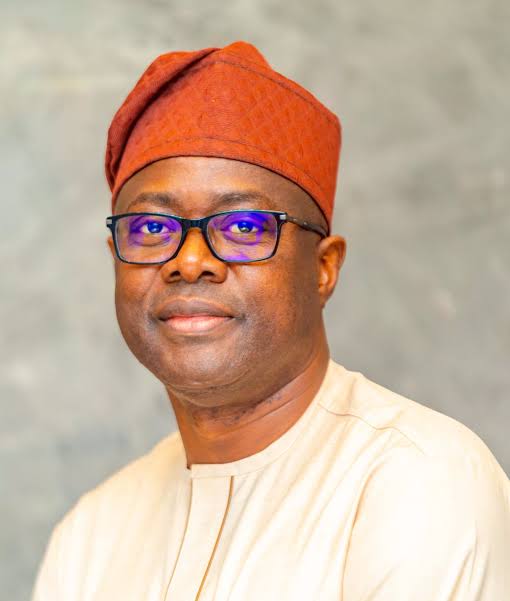
The presidential candidate of the Allied Peoples Movement (APM), Seyi Makinde, has said the outcome of the 2027 presidential election will be determined by Nigerian voters rather than wealthy individuals or the amount of money spent on campaigns.
Makinde made the statement on Monday at the APM North-Central Zonal Town Hall Meeting in Lafia, Nasarawa State, as part of the party’s engagements ahead of the 2027 election.
The Oyo State governor, who is campaigning under the “Reset Nigeria” agenda, said he did not believe the election would be decided by political commentators, opinion polls, the number of billionaires supporting candidates or the financial resources available to political campaigns.
According to him, the people of Nigeria would ultimately determine who emerges from the election.
Makinde also criticised the Federal Government’s handling of the economy, arguing that increased allocations to states had not necessarily translated into reduced hardship for citizens.
He acknowledged that states were receiving more money from the Federation Account but questioned whether the additional funds had resulted in meaningful progress in addressing hunger and other economic challenges.
The governor also spoke about Nigeria’s security situation, questioning the budgetary planning behind the establishment of additional army divisions. He said he had examined the 2026 budget for provisions relating to the new formations but could not identify the funding he expected for them.
Makinde outlines ‘Reset Nigeria’ agenda
The APM presidential candidate said his proposed “Reset Nigeria” programme would focus on four major areas: security, education, the economy and the country’s socio-political environment.
He said the programme could be implemented within four years if he becomes president, including changes to Nigeria’s security architecture and greater use of data and science in economic management.
Makinde further said his administration would commence a transition to a government of national unity from May 29, 2027, which he said would eventually lead to what he described as “new players and a new agenda” for Nigeria’s development.
The Lafia meeting formed part of the APM’s zonal consultations and political engagements ahead of the 2027 presidential election.

 News3 years ago
Hardship: We Plan To Establish A National Commodity Board To Crash Food Prices – VP Shettima
- News8 years ago
Blog Reader; Samson Osagiede Celebrates Fiancè Benedicta Daniels’s Birthday With Sweet Words
- Home10 years ago
News Channel claims Donald Trump is an orphan from Pakistan,share alleged childhood photo
 Sport8 years ago
Modric, Marta Wins 2018 FIFA Best Player Of The Year Awards ⚽️
- Home10 years ago
Another $175m Found in Patience Jonathan’s wife’s firm’s Bank Account
- Home10 years ago
Oil Spillage: House of Reps Member Shares Photos of the Water her Constituents Drink .
- Home10 years ago
Zara Buhari & Ahmed Indimi’s Wedding Access Card
- News8 years ago
The Best Video You’ve Seen Today?