Foreign
Swedish Scientist Advocates Wating Human Flesh to Fight Climate Change


A Swedish scientist, Magnus Soderlund, has proposed an unusual solution to fight climate change. He proposed cannibalism. Soderlund, a Stockholm School of Economics professor and researcher, said he believed that eating human meat, derived from dead bodies, might be able to help save the human race if only the world “awaken the idea.” Soderlund’s canvassed his position at a panel talk called “Can You Imagine Eating Human Flesh?” at the Gastro Summit in Stockholm.
He said “conservative” taboos against cannibalism can change over time if people simply tried eating human flesh.When asked during an interview after his talk if he personally would try human flesh, Soderlund said he was open to the idea.
“I feel somewhat hesitant but to not appear overly conservative…I’d have to say…I’d be open to at least tasting it,” he said.
He went on to suggest other options such as eating of pets and insects.
Meanwhile, a tribe in Papua New Guinea practised eating their dead as an alternative to allowing them to be consumed by worms, according to the Standard. The cultural practice led to an epidemic of a disease called Kuru, also known as laughing death.
The practice of cannibalism among the people of New Guinea came to an end in 1960.


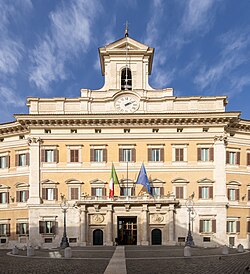
Italy’s Chamber of Deputies has given final approval to a major overhaul of the country’s electoral system, clearing the way for new voting rules ahead of next year’s general election.
The legislation, backed by Prime Minister Giorgia Meloni’s government, was approved in a secret ballot by 227 votes to 164 on Thursday, October 8.
The reform replaces Italy’s existing mixed electoral system with a fully proportional representation system. Under the new arrangement, a coalition securing more than 42 per cent of the vote would receive bonus seats intended to give it a working parliamentary majority.
The bonus would provide an additional 70 seats in the 400-member Chamber of Deputies and 35 seats in the 200-member Senate, although limits have been placed on the maximum number of seats a coalition can obtain through the system.
The reform also requires political parties and coalitions to identify their candidate for prime minister before the election. However, Italy’s constitution continues to give the president the formal authority to appoint the prime minister.
Meloni and her governing coalition have argued that the changes are designed to produce clearer election outcomes and improve government stability. Opposition parties, however, have strongly criticised the legislation, arguing that the new rules could restrict voter choice and unfairly benefit the governing coalition.
The opposition has also indicated that it intends to challenge aspects of the reform before Italy’s Constitutional Court once the law takes effect.
The final vote concludes months of debate and disagreements within both the governing coalition and opposition. The new electoral framework is expected to play an important role in Italy’s next general election, which is due in 2027.
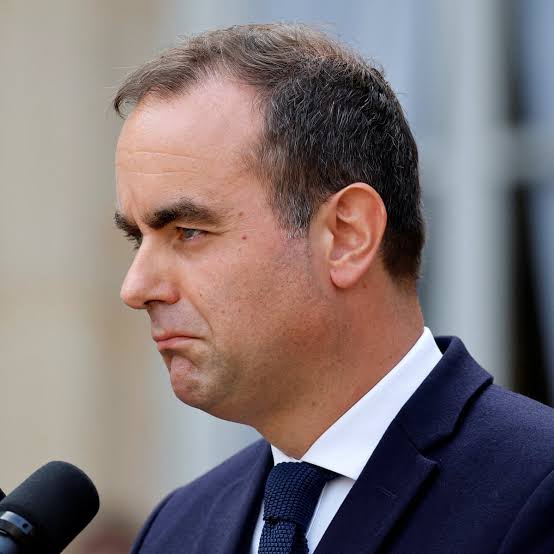
France is set to release 10 million barrels of diesel from its strategic reserves in a bid to ease pressure on consumers facing high fuel prices.
Prime Minister Sebastien Lecornu announced the measure on Wednesday, October 7, saying the diesel would be made available to fuel distributors in France for three months.
According to Lecornu, the diesel was purchased before the recent surge in prices and will be sold to distributors at cost price.
The French government expects the move to reduce pump prices by between 12 and 18 euro cents per litre, equivalent to roughly $0.13 to $0.20 per litre.
Lecornu said the implementation would require a government decree and that he would meet fuel distributors in the coming days to discuss how the measure would be carried out.
The decision comes amid tight diesel supplies and rising energy prices linked to disruptions in international energy markets, including the ongoing conflicts affecting oil and refined-product supplies.
The release is also part of a broader effort by G7 countries to mobilise strategic fuel reserves. The group recently agreed to make substantial volumes of oil and refined products available to the market, with diesel releases prioritised because of current supply pressures.
However, energy analysts have warned that releasing strategic reserves can provide only temporary relief, as the stocks will eventually need to be replenished if supply problems persist.
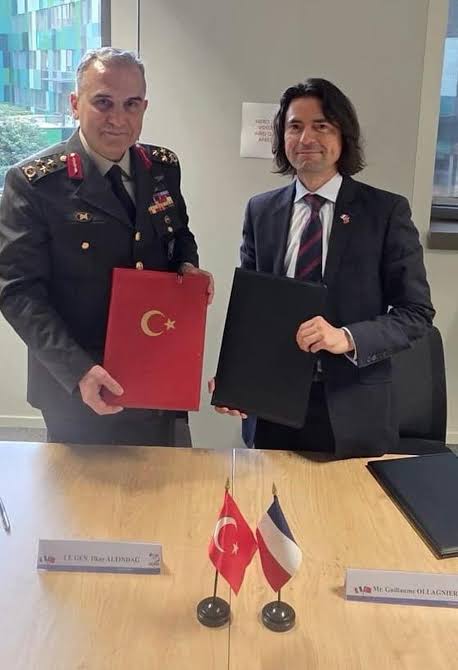
Türkiye and France have signed a Defence Cooperation Roadmap aimed at strengthening military ties and expanding strategic dialogue between the two countries.
The agreement was signed as part of ongoing efforts to deepen defence cooperation, according to Türkiye’s Ministry of National Defence.
The ministry disclosed that Lieutenant General İlkay Altındağ, Director General for Defence and Security, held discussions with senior French officials, including Minister Delegate for the Armed Forces Alice Rufo, French President’s Military Chief of Staff General Vincent Giraud, and Director General for International Relations and Strategy Guillaume Ollagnier.
The discussions focused on bilateral defence and military relations, strategic dialogue, and opportunities to expand existing areas of cooperation.
Both sides also emphasised the importance of maintaining regular and result-oriented engagements to ensure progress in their relationship.
According to the Turkish ministry, the newly signed roadmap represents an important step towards strengthening defence cooperation and translating positive messages exchanged by the leaders of both countries into practical collaboration.
The roadmap is expected to provide a framework for more consistent strategic discussions and mutually beneficial cooperation.
Türkiye and France, both members of the North Atlantic Treaty Organization (NATO), have continued to engage on defence matters, military industry cooperation and regional security issues.
Although the roadmap signals closer cooperation, the announcement did not disclose specific military procurement agreements, weapons deals or joint production commitments.

 News3 years ago
Hardship: We Plan To Establish A National Commodity Board To Crash Food Prices – VP Shettima
- News8 years ago
Blog Reader; Samson Osagiede Celebrates Fiancè Benedicta Daniels’s Birthday With Sweet Words
- Home10 years ago
News Channel claims Donald Trump is an orphan from Pakistan,share alleged childhood photo
 Sport8 years ago
Modric, Marta Wins 2018 FIFA Best Player Of The Year Awards ⚽️
- Home10 years ago
Another $175m Found in Patience Jonathan’s wife’s firm’s Bank Account
- Home10 years ago
Oil Spillage: House of Reps Member Shares Photos of the Water her Constituents Drink .
- Home10 years ago
Zara Buhari & Ahmed Indimi’s Wedding Access Card
- News8 years ago
The Best Video You’ve Seen Today?