
News
Ambode Reshuffled Cabinet, Sacks Three Commissioners

Governor Akinwunmi Ambode of Lagos State on Thursday reshuffled his cabinet, dropping three commissioners and appointing five new ones.
The Secretary to the State Government, Mr. Tunji Bello, in a statement on Thursday, said the three dropped commissioners are Mrs. Adebimpe Akinsola, Mr. Femi Odubiyi, and Mr. Anifowoshe Abiola, while Messrs Hakeem Fahm, Ladi Lawanson, Segun Banjo, Olayinka Oladunjoye and Hakeem Sulaiman were appointed to head Ministry of Science and Technology, Ministry of Transportation, Ministry of Economic Planning and Budget, Ministry of Commerce and Industry and Ministry of Communities and Communications respectively.
The governor also moved Mr. Rotimi Ogunleye from Commerce and Industry to Physical Planning and Urban Development; Mr. Steve Ayorinde from Ministry of Information and Strategy to Ministry of Tourism, Arts and Culture; Mr. Kehinde Bamigbetan from Communities and Communication to Ministry of Information and Strategy; Mr. Babatunde Durosinmi Etti from Ministry of Wealth Creation to Ministry of the Environment; Mrs. Uzamat Akinbile-Yusuf from Ministry of Youth and Social Development to Ministry of Wealth Creation; Mr. Agboola Dabiri from Central Business District to Ministry of Youth and Social Development.
Others include Dr. Samuel Adejare from Ministry of the Environment to Ministry of Waterfront Infrastructure Development; Engr. Ade Akinsanya from Ministry of Waterfront Infrastructure Development to Ministry of Works and Infrastructure.
The statement added that Mr. Benjamin Olabinjo has been moved from Special Adviser Commerce and Industry to become Special Adviser Civic Engagement, while Mr. Kehinde Joseph moved from Special Adviser Civic Engagement to become Special Adviser Housing.
Mr. Deji Tinubu, Special Adviser Sports has been redeployed as Special Adviser to the Governor on Commerce and Industry and Mr. Anofiu Elegushi moves from Special Adviser Transport to become Special Adviser, Central Business District.
The new Commissioners are expected to be cleared by the State House of Assembly while the other redeployment and postings take immediate effect.


News
Wole Olanipekun, Taiwo Oyedele Urge South-West Governors to Maximise Tinubu Presidency for Regional Growth
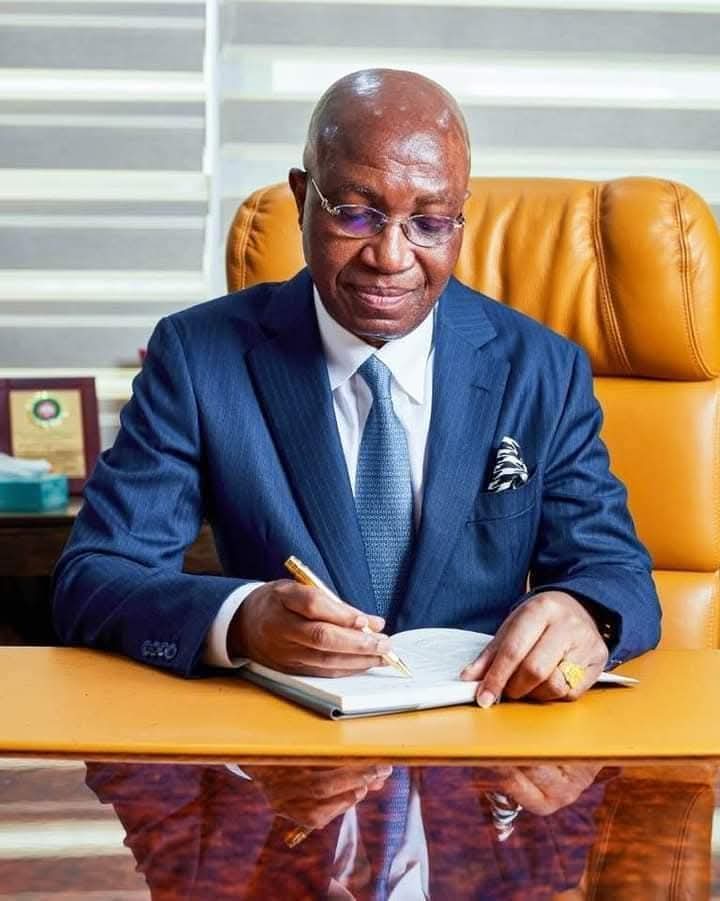
Senior Advocate of Nigeria (SAN), Wole Olanipekun, and Chairman of the Presidential Fiscal Policy and Tax Reforms Committee, Taiwo Oyedele, have called on South-West governors and political leaders to fully leverage President Bola Tinubu’s administration to drive accelerated development across the region.
The duo made the call on Monday in Akure, Ondo State capital, while speaking at a public lecture organised as part of activities marking the 50th anniversary of Ondo State’s creation.
They stressed that the South-West must prioritise massive investments in infrastructure, industrialisation, and economic reforms during Tinubu’s tenure to secure long-term regional prosperity.
Olanipekun cautioned that the political advantage of having a South-West president is temporary, noting that President Tinubu’s tenure will come to an end after his second term in 2031.
According to him, the region must act decisively within this window to strengthen its economic base and ensure sustainable development beyond the current administration.
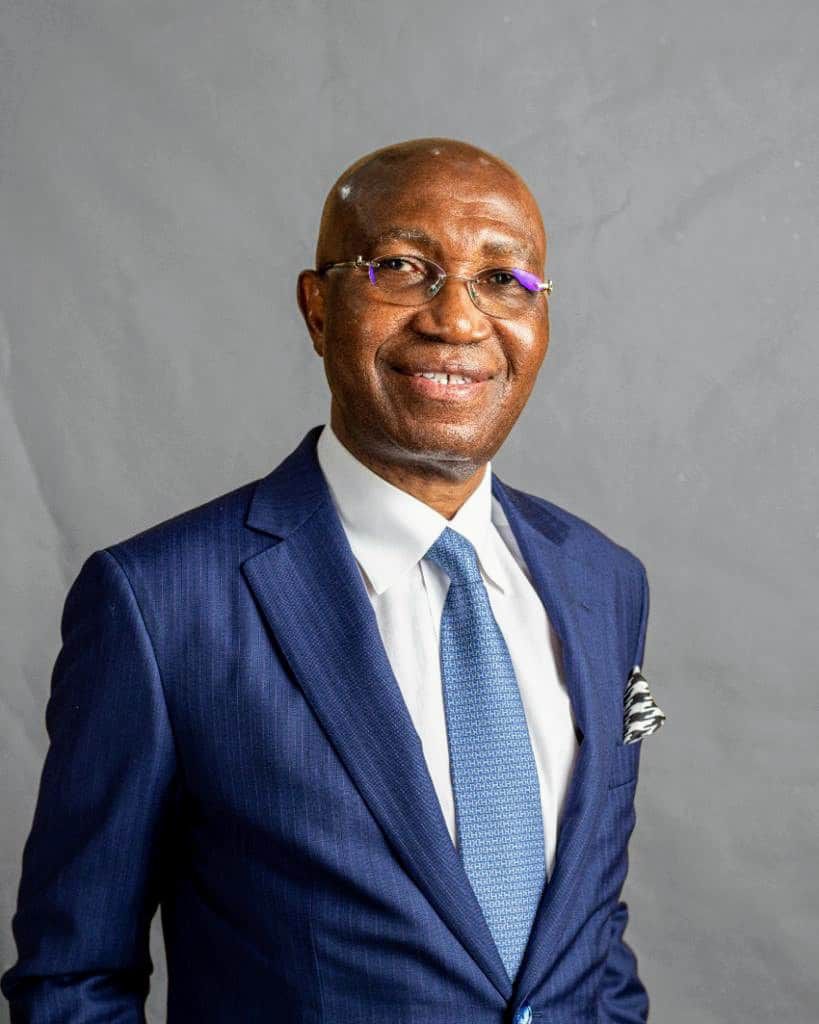

Former Attorney-General of the Federation, Abubakar Malami (SAN), has disclosed details of his earnings while asking a Federal High Court in Abuja to set aside an interim order authorising the seizure of 57 properties allegedly linked to him.
Malami made the disclosure through his counsel, Joseph Daudu (SAN), in a motion on notice filed before the court. The application seeks to vacate an interim forfeiture order affecting three of the 57 properties currently under investigation by the Economic and Financial Crimes Commission (EFCC).
According to the court filing, Malami stated that he had fully and transparently declared his sources of income in his asset declaration submitted to the Code of Conduct Bureau (CCB).
The document outlined multiple income streams, including:
₦374.63 million earned from salaries, estacodes, severance allowances, and related entitlements.
₦574.07 million generated from the disposal of personal assets.
₦10.01 billion recorded as turnover from private business ventures.
₦2.52 billion issued as loans to various businesses.
₦958 million received as traditional gifts from personal friends.
₦509.88 million realised from the launch and public presentation of his book titled “Contemporary Issues on Nigerian Law and Practice: Thorny Terrains in Traversing the Nigerian Justice Sector – My Travails and Triumphs.”
Malami’s legal team argued that the declared earnings sufficiently explain the source of funds used to acquire the properties in question, urging the court to lift the interim seizure order.
The matter remains pending before the Federal High Court as the EFCC continues its forfeiture proceedings.




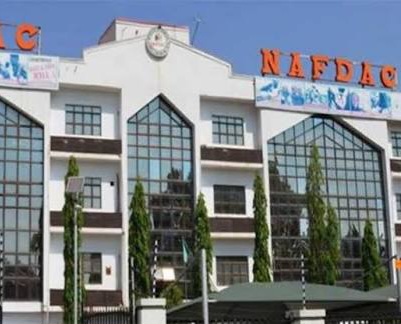
The Manufacturers Association of Nigeria has appealed to the Federal Government to restrain the National Agency for Food and Drug Administration and Control from proceeding with its ban on alcoholic beverages packaged in sachets and small PET bottles, warning of catastrophic economic consequences.
In a statement issued by Director-General Segun Ajayi-Kadir, MAN described NAFDAC’s renewed enforcement action as detrimental to indigenous industrial operators and fundamentally inconsistent with earlier government directives.
The manufacturers’ body emphasized that NAFDAC’s recent move directly contradicts the House of Representatives resolution dated March 14, 2024, which specifically restrained the agency from implementing the punitive ban following comprehensive stakeholder consultations through a public hearing.
“Rather than abiding by the generally agreed resolution, NAFDAC bided its time and chose to rely on a resolution of the Senate that was devoid of the usual stakeholders’ engagement,” Ajayi-Kadir stated, noting that operators now face confusion over conflicting directives from different arms of government.
MAN warned that enforcing the ban would devastate Nigeria’s manufacturing sector, threatening over ₦1.9 trillion in existing investments and triggering the retrenchment of more than 500,000 direct employees alongside approximately five million workers in the indirect value chain.
The association cautioned that the restriction would paradoxically undermine public health by creating market opportunities for illicit, substandard and unregulated products beyond the control of regulatory authorities.
“This is counterproductive as it will open up the market for illicit, sub-standard, and unregulated products. It will lead to an influx of imported alternatives, mostly smuggled. It will deny the government of revenues collectable from the companies,” Ajayi-Kadir declared.
The manufacturers’ group emphasized that alcohol served in sachets by local producers is manufactured under hygienic conditions and certified by regulatory agencies including NAFDAC itself, making the ban particularly contradictory.
MAN also challenged the untested assertion that sachet alcohol drives underage consumption, citing credible and empirical research that contradicts this claim. The industry has independently invested over ₦1 billion in nationwide media campaigns promoting responsible alcohol consumption and discouraging underage abuse.
The association stressed that banning certified products would deny adult consumers with limited budgets access to regulated alcoholic beverages while simultaneously depriving the government of substantial tax revenues.
Food, Beverages and Tobacco Senior Staff Association and National Union of Food, Beverages and Tobacco Employees have joined MAN in opposing the ban, demanding that NAFDAC provide empirical evidence that sachet alcoholic beverages are being consumed by children.
Labor unions have called for the suspension of NAFDAC Director-General Professor Mojisola Adeyeye, accusing her of siding with multinational companies to undermine local manufacturers.
However, NAFDAC has maintained its position, with Adeyeye insisting that enforcement is backed by law following the Senate’s unanimous resolution setting a December 2025 deadline that has now passed.
The NAFDAC chief argued that the proliferation of high-alcohol-content beverages in sachets has made such products easily accessible, affordable and concealable, contributing to widespread misuse and addiction among minors and commercial drivers.
“This public health menace has been linked to increased incidences of domestic violence, road accidents, school dropouts, and social vices across communities,” Adeyeye stated, describing the ban as protective rather than punitive.
In contrast, civil society organization Socio-Economic Rights and Accountability Project has approached the Federal High Court in Lagos seeking injunctive orders to prevent the Federal Government from interfering with NAFDAC’s statutory powers to enforce the ban.
SERAP argues that continued circulation of sachet alcohol violates the National Health Act 2014, the NAFDAC Act and international commitments under the World Health Organization’s Global Strategy to Reduce Harmful Use of Alcohol.
The legal and economic battle over sachet alcohol highlights deeper tensions between public health regulation, economic survival and stakeholder consultation in Nigeria’s policymaking process, with no clear resolution in sight as multiple court cases and regulatory actions unfold simultaneously.
-
 News2 years ago
Hardship: We Plan To Establish A National Commodity Board To Crash Food Prices – VP Shettima
-
News8 years ago
Blog Reader; Samson Osagiede Celebrates Fiancè Benedicta Daniels’s Birthday With Sweet Words
-
Home9 years ago
News Channel claims Donald Trump is an orphan from Pakistan,share alleged childhood photo
-
Home9 years ago
Another $175m Found in Patience Jonathan’s wife’s firm’s Bank Account
-
Home9 years ago
Oil Spillage: House of Reps Member Shares Photos of the Water her Constituents Drink .
-
Home9 years ago
Zara Buhari & Ahmed Indimi’s Wedding Access Card
-
 Sport7 years ago
Modric, Marta Wins 2018 FIFA Best Player Of The Year Awards ⚽️
-
News8 years ago
The Best Video You’ve Seen Today?