News
Abuja Court Grants Alleged Husband Killer Bail

An FCT High Court has granted bail to Maryam Sanda, who allegedly killed her husband, Bilyamin Bello.
Mr. Bello was a son to former chairman of the People’s Democratic Party, Haliru Bello.
Ms. Sanda was granted bail by the judge, Yusuf Halilu, based on medical reports which indicate she is pregnant and ill.
She has been facing trial on allegations of homicide for the alleged killing of her husband and had been denied bail on at least two occasions.


The Federal Government incurred a gross electricity tariff subsidy obligation of N1.928 trillion in 2025, according to the Nigerian Electricity Regulatory Commission (NERC).
The figure represents the amount required to bridge the gap between cost-reflective electricity tariffs and the lower rates approved for customers.
According to NERC’s 2025 industry report, the subsidy obligation represented 57.44 per cent of the total Nigerian Bulk Electricity Trading (NBET) invoice, averaging about N160.69 billion per month.
Subsidy Burden Declined Slightly
Despite the huge financial burden, the 2025 figure was slightly lower than the N1.949 trillion recorded in 2024.
NERC reported that the subsidy obligation stood at:
– N536.40 billion in the first quarter
– N514.36 billion in the second quarter
– N458.76 billion in the third quarter
– N418.79 billion in the fourth quarter
The quarterly figures show a gradual decline in the subsidy obligation as the year progressed.
Why Electricity Subsidy Remained High
NERC attributed the subsidy burden largely to the Federal Government’s policy of maintaining approved customer tariffs even as the cost of supplying electricity increased.
Because tariffs paid by many consumers remained below cost-reflective levels, the government was required to absorb the difference.
The commission said the gradual decline in the subsidy obligation was partly driven by lower energy off-take by electricity distribution companies (DisCos) and a higher proportion of electricity being allocated to Band A customers.
More Electricity Allocated to Band A
NERC disclosed that the share of energy allocated to Band A customers increased from 40 per cent to 45 per cent in the fourth quarter of 2025.
Band A customers are those expected to receive significantly longer daily electricity supply than customers in the lower service bands.
The shift in energy allocation formed part of efforts to improve the commercial performance of electricity distribution and encourage better service delivery.
DisCos Billed N2.99trn, Collected N2.32trn
NERC also reported significant collection challenges within the distribution segment of the electricity market.
The 11 DisCos collectively billed customers N2.988 trillion in 2025 but collected only N2.319 trillion, leaving an outstanding balance of approximately N669.49 billion.
The resulting collection efficiency stood at 77.60 per cent.
Eko DisCo recorded the highest collection efficiency at 87.90 per cent, closely followed by Ikeja DisCo at 87.89 per cent, while Kaduna DisCo recorded the lowest at 45.68 per cent.
Financial Pressure on Power Sector
The combination of tariff subsidies and collection inefficiencies continues to place pressure on the finances of Nigeria’s electricity market.
NERC warned that weak liquidity in the sector could limit the ability of market participants to invest in infrastructure and expand electricity supply.
The latest figures therefore highlight the continuing challenge of balancing affordable electricity tariffs for consumers with the need to ensure that electricity providers receive enough revenue to operate sustainably.
With the government absorbing more than N1.9 trillion in tariff shortfalls in 2025, the future of electricity pricing and subsidy policy remains a major issue for Nigeria’s power sector.
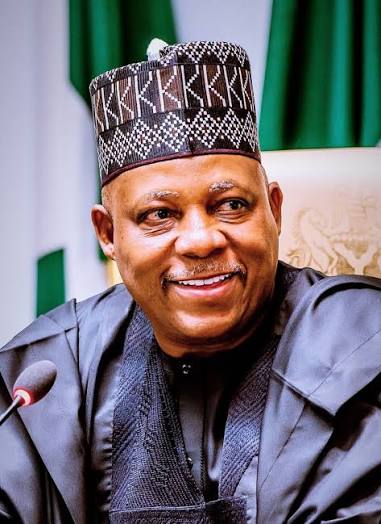
Vice President Kashim Shettima has returned to Nigeria after representing President Bola Ahmed Tinubu at the 21st Extraordinary Session of the Assembly of Heads of State and Government of the African Union (AU) in Luanda, Angola.
Shettima returned to Abuja on Monday after concluding his engagements at the high-level summit, according to a statement by his spokesperson, Stanley Nkwocha.
Shettima Delivers Nigeria’s Position
During the summit, Shettima represented Nigeria in discussions focused on peace, security and conflict resolution across Africa.
According to Nkwocha, Nigeria called for stronger African-led mechanisms for conflict prevention and resolution, as well as urgent continental action against recurring xenophobic and Afrophobic attacks targeting Africans and other nationals in South Africa.
The Vice President’s participation was part of Nigeria’s continued involvement in efforts to strengthen peace and security mechanisms across the continent.
Nigeria Backs Luanda Action Plan
Nigeria also backed the Luanda Action Plan during the summit.
The country called for sustainable financing of Africa’s peace and security architecture and urged stronger collective responsibility among AU member states.
Nigeria further advocated greater African ownership of solutions to conflicts affecting the continent rather than relying excessively on external intervention.
Shettima Returns to Abuja
Shettima travelled to Luanda on Saturday to represent President Tinubu at the summit.
He was accompanied by senior government, defence and security officials, who participated in various engagements during the visit.
The Nigerian delegation also interacted with members of the Nigerian community in Angola, where officials discussed concerns affecting Nigerians living in the country.
Following the conclusion of his official engagements, Shettima returned to Abuja, marking the end of Nigeria’s participation in the summit.
The Vice President’s return comes as Nigeria continues to push for stronger African cooperation in addressing insecurity, preventing conflicts and strengthening the continent’s capacity to manage its own peace and security challenges.
Nigeria’s external reserves have risen to $53.11 billion, reaching their highest level in more than 17 years, according to the latest data from the Central Bank of Nigeria (CBN).
The reserves increased by about $3.15 billion between June 3 and August 24, 2026, rising from $49.96 billion to $53.112 billion.
The latest figure brings Nigeria close to the reserve levels recorded in 2009, when the country last approached its current position.
Reserves Near 2009 Record
At $53.11 billion, Nigeria’s current reserve position is only about $142 million below the $53.25 billion recorded on January 12, 2009.
The steady accumulation gathered momentum during July and August.
CBN data showed that reserves rose from $51.53 billion on July 3 to about $52 billion on July 27. The figure subsequently increased to $52.86 billion on August 21, before crossing the $53 billion threshold.
Oil Earnings Boost Dollar Inflows
The rise in reserves has been linked by experts to stronger foreign-exchange inflows, including earnings from crude oil exports.
Oil remains one of Nigeria’s major sources of foreign exchange, meaning higher crude prices and improved oil production can strengthen the country’s dollar earnings.
However, analysts have cautioned that maintaining the reserve buildup will depend on the continued inflow of foreign exchange into the economy.
Naira Records Relative Stability
The increase in external reserves has also coincided with relative stability in Nigeria’s foreign exchange market.
According to CBN data cited in the report, the naira closed at N1,343.59 to the US dollar on August 26, while foreign-exchange market turnover stood at approximately $235.99 million, with 213 deals recorded.
A stronger reserve position provides the country with a larger external buffer and can improve confidence in the foreign-exchange market.
Reserves Surpass 2026 Projection
The latest reserve figure is also above the CBN’s projected reserve level of approximately $51.04 billion for the full year.
The increase represents a significant improvement from the beginning of 2026. Earlier data showed that reserves had risen by about $7.09 billion since the start of the year.
The higher reserves could strengthen Nigeria’s ability to meet external obligations and respond to periods of increased demand for foreign currency.
Sustainability Remains Key
Despite the positive development, maintaining the reserve buildup will remain important.
Analysts have pointed to the need for Nigeria to diversify its sources of foreign exchange through stronger oil production, increased non-oil exports, foreign investment, remittances and improved FX liquidity.
A sustained increase in reserves could provide additional support for macroeconomic stability and strengthen confidence in the naira.
For now, Nigeria’s crossing of the $53 billion reserve mark represents one of the strongest external-position improvements the country has recorded in more than a decade.

 News3 years ago
Hardship: We Plan To Establish A National Commodity Board To Crash Food Prices – VP Shettima
- News8 years ago
Blog Reader; Samson Osagiede Celebrates Fiancè Benedicta Daniels’s Birthday With Sweet Words
- Home10 years ago
News Channel claims Donald Trump is an orphan from Pakistan,share alleged childhood photo
- Home10 years ago
Another $175m Found in Patience Jonathan’s wife’s firm’s Bank Account
- Home10 years ago
Oil Spillage: House of Reps Member Shares Photos of the Water her Constituents Drink .
- Home10 years ago
Zara Buhari & Ahmed Indimi’s Wedding Access Card
 Sport8 years ago
Modric, Marta Wins 2018 FIFA Best Player Of The Year Awards ⚽️
- News8 years ago
The Best Video You’ve Seen Today?