Politics
2016 budget won’t work if corruption is not tackled – Lai Mohammed


The Minister of Information and Culture, Alhaji Lai Mohammed has identified corruption as the major reason poverty is on the increase despite the steady growth in the amount budgeted for each year since 1999.
He then assured that there will be more money to go round once the vice is successfully tackled.
The minister disclosed this on Monday when he visited two Hausa-language newspapers based in Abuja in continuation of his ongoing consultation with key stakeholders in his ministry to support the campaign against corruption.
According to him, “If only we fight corruption successfully, there will be more money for everybody. If the leakages can be blocked successfully, I can assure you it won’t matter whether oil sells for $10 or $5, we will be able to run this country efficiently.
“If we don’t really take care of corruption, even the 2016 budget, we will not be able to operate because what we have found out is that it is these leakages (corruption) that are making the country to bleed. It is not by accident that between 1999 and today, the budget has been increasing every year yet poverty has also been increasing. Why? Because of corruption.
”In 1999, the entire budget was N947 billion, in 2016, it is N6 trillion. Has poverty gone down? It has increased almost by that margin. The issue of corruption must not be taken lightly. We must fight it as we fought Boko Haram, like we fought Ebola. We must fight it to a standstill,” he said.
Mohammed went on to debunk insinuations that President Muhammadu Buhari’s anti-corruption war was an orchestrated vendetta against the main opposition party, insisting that it was a battle to pull Nigeria back from the brink and return the nation to the path of economic growth and sustainable development.
He attributed the decay in infrastructure, grinding poverty, stunted economic growth, widespread inequality, maternal mortality and other maladies afflicting the nation to corruption in governance which, he said, must be fought to a standstill for the country to achieve meaningful development.


Nigeria’s National Register of Voters has surpassed 103 million ahead of the 2027 general elections, the Independent National Electoral Commission (INEC) has announced.
INEC Chairman, Professor Joash Amupitan, disclosed the latest figure on Monday in Abuja while delivering a keynote address at a strategic workshop for media executives organised by the Nigerian Guild of Editors in collaboration with the commission.
According to Amupitan, the increase followed the completion of the three-phase Continuous Voter Registration (CVR) exercise and the final clean-up of the register using the Automated Biometric Identification System (ABIS).
The three phases of the CVR exercise produced a combined 10,772,421 new registrations.
The first phase, conducted between August 25 and December 10, 2025, recorded 2,611,266 registrations. The second phase, held from January 5 to April 17, 2026, produced 4,121,835 registrations, while the third phase, conducted from May 11 to July 26, recorded 3,867,997 registrations.
Amupitan said the newly registered voters were subjected to biometric verification, while the commission also completed the public display of the Preliminary Register to allow citizens to raise claims and objections.
Following the final ABIS clean-up, INEC said the national voter register had moved beyond the 103 million mark.
PVC Collection to Begin October 9
The INEC chairman also announced that nationwide collection of Permanent Voter Cards (PVCs) will commence on Friday, October 9, 2026.
Newly produced PVCs are expected to be distributed to Local Government Area collection centres for eligible voters to collect.
The commission has also introduced printable PVC technology, which it says is designed to reduce the waiting period for voters who need new or replacement cards.
INEC said the technology was introduced in accordance with Section 18(1) of the Electoral Act 2026.
The commission has completed eight of the 14 major statutory activities on its timetable for the 2027 elections, according to Amupitan.
The latest voter register figure marks a significant increase from the 93,469,008 registered voters recorded for the 2023 general elections.

Former Vice President Atiku Abubakar has criticised the All Progressives Congress (APC)-led Federal Government, accusing the administration of worsening poverty and economic hardship across Nigeria.
Atiku made the remarks in a statement published on Thursday, October 1, 2026, where he questioned the economic direction of the country under the APC government.
The African Democratic Congress (ADC) chieftain argued that the administration’s economic policies had placed additional pressure on households and businesses, making it increasingly difficult for many Nigerians to meet their basic needs.
He maintained that government claims of economic progress should be measured against the living conditions of ordinary citizens rather than financial and economic statistics alone.
Atiku Questions Government’s Economic Performance
The former vice president has repeatedly criticised the Federal Government’s handling of the economy, particularly the removal of fuel subsidies and foreign exchange reforms.
In previous remarks, Atiku argued that rising petrol prices had increased transportation, production and food costs, leaving households with reduced purchasing power. He also called on President Bola Tinubu to consider measures that would ease the cost-of-living burden. (Channels Television)
He has also challenged the administration’s reliance on macroeconomic indicators to demonstrate progress, insisting that economic reforms should translate into improved living standards for Nigerians. (The Guardian)
Atiku’s latest criticism comes as political parties and their candidates continue preparations for the 2027 general elections, with the economy expected to remain a major issue in political discussions.
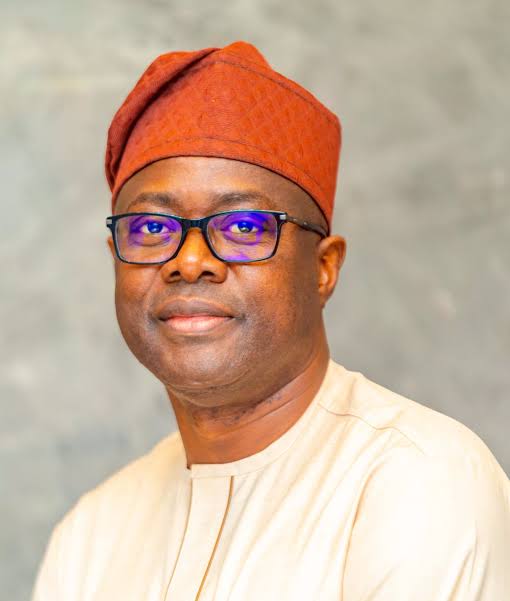
The presidential candidate of the Allied Peoples Movement (APM), Seyi Makinde, has said the outcome of the 2027 presidential election will be determined by Nigerian voters rather than wealthy individuals or the amount of money spent on campaigns.
Makinde made the statement on Monday at the APM North-Central Zonal Town Hall Meeting in Lafia, Nasarawa State, as part of the party’s engagements ahead of the 2027 election.
The Oyo State governor, who is campaigning under the “Reset Nigeria” agenda, said he did not believe the election would be decided by political commentators, opinion polls, the number of billionaires supporting candidates or the financial resources available to political campaigns.
According to him, the people of Nigeria would ultimately determine who emerges from the election.
Makinde also criticised the Federal Government’s handling of the economy, arguing that increased allocations to states had not necessarily translated into reduced hardship for citizens.
He acknowledged that states were receiving more money from the Federation Account but questioned whether the additional funds had resulted in meaningful progress in addressing hunger and other economic challenges.
The governor also spoke about Nigeria’s security situation, questioning the budgetary planning behind the establishment of additional army divisions. He said he had examined the 2026 budget for provisions relating to the new formations but could not identify the funding he expected for them.
Makinde outlines ‘Reset Nigeria’ agenda
The APM presidential candidate said his proposed “Reset Nigeria” programme would focus on four major areas: security, education, the economy and the country’s socio-political environment.
He said the programme could be implemented within four years if he becomes president, including changes to Nigeria’s security architecture and greater use of data and science in economic management.
Makinde further said his administration would commence a transition to a government of national unity from May 29, 2027, which he said would eventually lead to what he described as “new players and a new agenda” for Nigeria’s development.
The Lafia meeting formed part of the APM’s zonal consultations and political engagements ahead of the 2027 presidential election.

 News3 years ago
Hardship: We Plan To Establish A National Commodity Board To Crash Food Prices – VP Shettima
- News8 years ago
Blog Reader; Samson Osagiede Celebrates Fiancè Benedicta Daniels’s Birthday With Sweet Words
- Home10 years ago
News Channel claims Donald Trump is an orphan from Pakistan,share alleged childhood photo
 Sport8 years ago
Modric, Marta Wins 2018 FIFA Best Player Of The Year Awards ⚽️
- Home10 years ago
Another $175m Found in Patience Jonathan’s wife’s firm’s Bank Account
- Home10 years ago
Oil Spillage: House of Reps Member Shares Photos of the Water her Constituents Drink .
- Home10 years ago
Zara Buhari & Ahmed Indimi’s Wedding Access Card
- News8 years ago
The Best Video You’ve Seen Today?